🌿 Accompagnement corporel & coaching relationnel en tango – séances en anglais.



The Four Pillars of Good Tango
Discover the four essential pillars of tango: technique, connection, figures, and musicality. A deeper, philosophical look at what makes tango truly meaningful.
Ana Lovrić
4/2/20263 min read
Four is a number with powerful symbolism and strength. There are four cardinal directions, four elements, four seasons, four aspects of the human being… the list goes on.
It’s no surprise that in tango we also think about four aspects that are equally important and which, together as a whole, create a good tango. At different stages of our tango journey, we tend to focus more on some and less on others.
These four pillars are: figures, technique, connection, and musicality. Let’s go through them one by one.
Figures
Tango figures are what we encounter first when we start dancing. We have to begin somewhere. To even begin to understand tango, we start with figures. Figures represent the mental aspect of tango. We learn the rules of the dance, specific step patterns, principles, and basic premises. In this way, we become aware of how tango differs from other dances and place it within our skill set.
Very often, figures take over the entire tango. They become the most important—and sometimes the only—measure of how good a dancer someone is, as if knowing many steps guarantees good tango. This aspect is often driven by external perception—what others will think when they see how much we know or don’t know. Fortunately, good tango doesn’t really depend on how many figures we perform on the dance floor.
Technique
To perform figures with ease, to enjoy them, to improvise and express ourselves freely, we must master technique. Technique is the physical aspect of the dance. We want to understand our bodies and how they move, so we can control some parts while relaxing others. Through technique, we train our muscles and build muscle memory, ensuring that everything we do later has consistency, quality, and depth.
Practicing technique is often the most boring part of learning. If you’re not truly interested in your body—its possibilities, limitations, and its ability to be shaped and trained—you may find technique classes dry and unpleasant. Still, without this aspect, our enjoyment of tango will be quite limited.
Connection / Contact
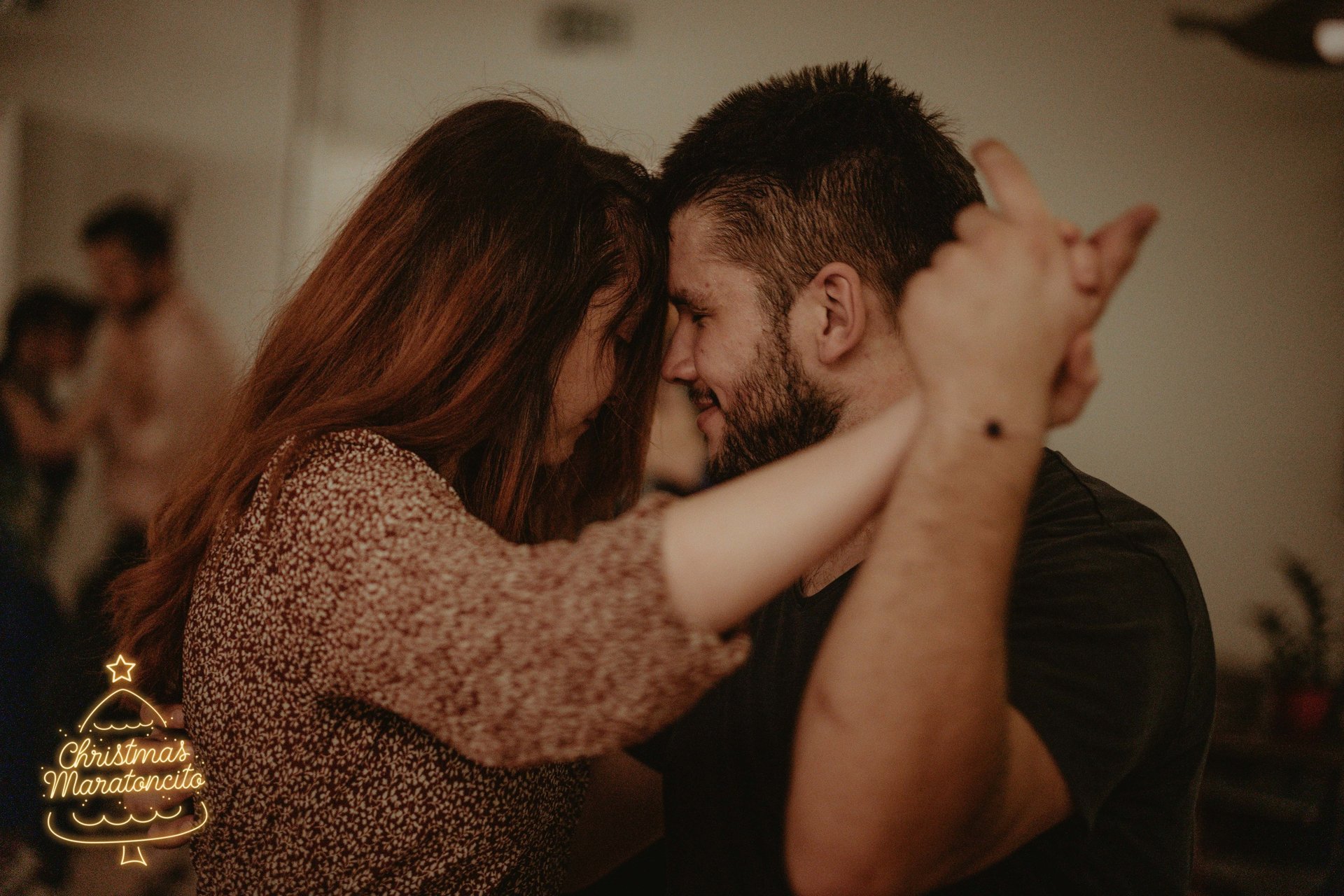
What makes tango truly special is the embrace. When we dance tango, we dance in an embrace, and two bodies become one. The feeling of merging with another person while moving harmoniously creates a deep sense of belonging and understanding—a sense that we can share something meaningful. This shared part comes from the deepest core of our being, revealing who we truly are. The embrace is a place where we surrender to each other with trust and respect.
Establishing connection is the emotional aspect of tango. The intensity of the embrace can awaken all our senses, trigger a cascade of emotions, break through our imagined boundaries, and bring color into our lives.
Working on this aspect is not easy, because we inevitably encounter ourselves in the process. But just consider how much we miss if we cut off our emotional side and set it aside. Dancing tango without emotions is like living life without emotions—empty, dull, and not truly human.
Musicality
Finally, the queen of this quartet: Her Majesty, Musicality. Music is what drives the dance. Without music, who would ever think of dancing? Musicality is often a neglected aspect—until the moment we realize that without music, nothing else makes sense. Not the steps, not the technique, not even the partner or the connection.
Music creates a framework larger than ourselves. It dictates movement—it is what we follow together.
Music is abstract and hard to explain, yet we all feel it and respond to it. Imagine how dreadful the world would be without this beautiful art form.
In tango, musicality arguably takes precedence over everything else. When we, as a couple, immerse ourselves in the music—when we both perceive it and allow ourselves to be guided by it—everything else falls more naturally into place. From connection with the music, we find connection with each other, discover the right steps, and the body finds a way to execute them.
Musicality is the spiritual aspect of tango—a universal, abstract principle that is hard to explain but inspires, guides, and supports us. It opens us to deeper dimensions of ourselves, to something intuitive and creative within us.
One thing I notice, without exception, is this: being with the music and in the music brings joy—regardless of all other elements.
When we balance all these aspects of tango and give each of them the attention it deserves, something magical happens.
The magic of tango. 😊
© 2026 Tango Garden
Shortcuts